
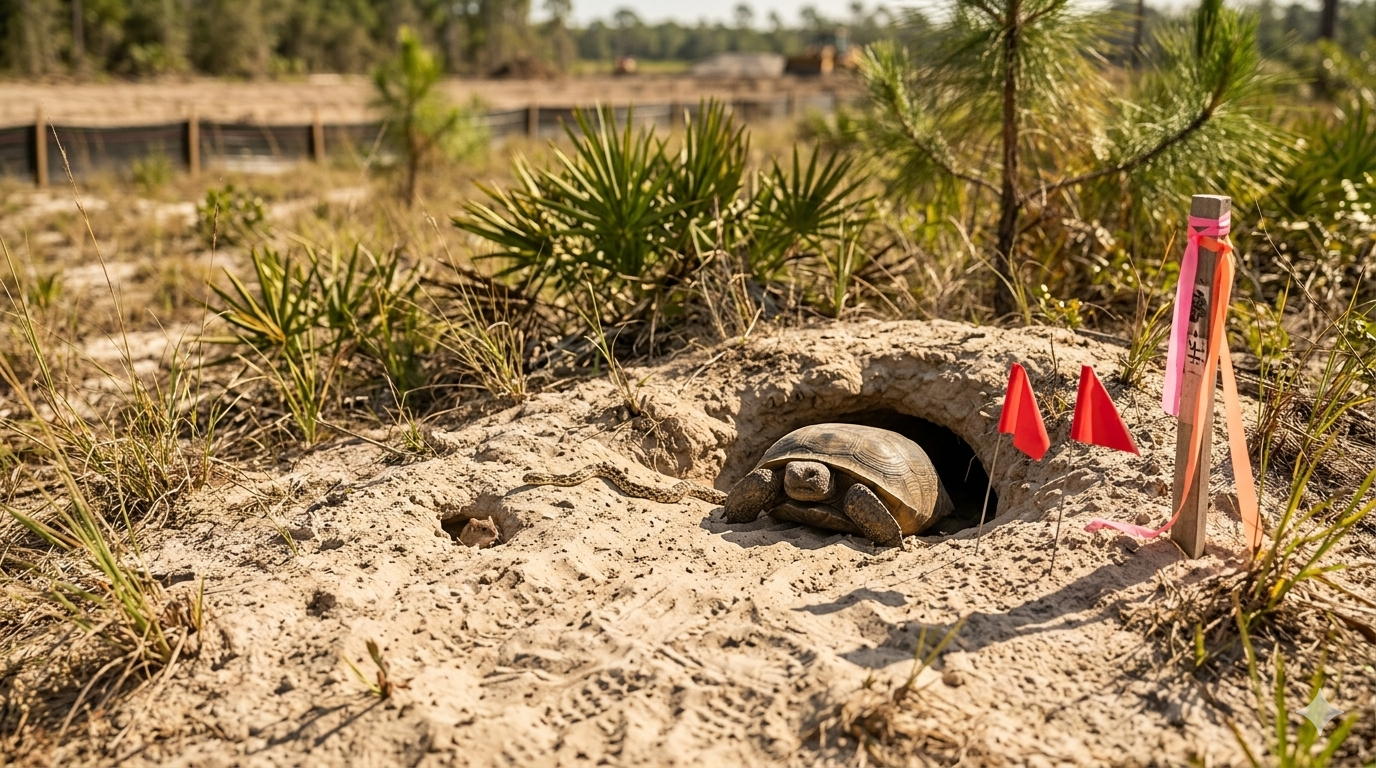
At first glance, a gopher tortoise burrow might look like a simple patch of disturbed sand. But in Florida, that
small opening in the ground represents one of the most protected and important parts of the state’s upland
ecosystem. These burrows don’t just serve one species; they provide shelter for dozens of other animals and play a
major role in maintaining natural habitats.
If you own land, manage construction projects, or work in planning and development, understanding how these burrows
are regulated is essential. Missing one during site work can lead to serious delays, fines, or even halted projects.
As Florida continues to grow, encounters between development and protected wildlife are becoming more common. That’s
why knowing how Florida Fish and Wildlife Conservation Commission (FWC) regulations apply to gopher tortoises can
make a real difference in how smoothly your project moves forward.
In this blog, you’ll learn how to recognize a gopher tortoise burrow, why it’s protected by law, and what steps are
required when one is found on your property.
What Is a Gopher Tortoise Burrow?
A gopher tortoise burrow is an underground tunnel dug by the gopher tortoise (Gopherus polyphemus), a long-lived,
land-dwelling reptile native to the southeastern United States. In Florida, these burrows are most often found in
dry, sandy upland areas with open vegetation where sunlight reaches the ground.
Burrows typically extend 10 to 30 feet long and can reach 6 to 10 feet deep. This
depth creates a stable environment that protects tortoises from extreme temperatures, predators, wildfires, and
drought. Many burrows remain in use for decades, even if the original tortoise has moved on.
Because these burrows are essential to the survival of the species, Florida law protects both the tortoise
and the burrow itself, even if the burrow appears inactive or unoccupied.
Why Is the Gopher Tortoise Burrow Protected in Florida?
The gopher tortoise is listed as a state-threatened species in Florida. As a result, its burrows are
protected under FWC gopher tortoise regulations.
It is illegal to:
- Harass, harm, or kill a gopher tortoise
- Collapse, fill, or disturb a gopher tortoise burrow
- Block burrow entrances
- Conduct land-clearing or construction activities that impact burrows without authorization
Violations can lead to fines, stop-work orders, mitigation requirements, and serious project delays.
Protecting gopher tortoise burrows isn’t just about one species; it’s about preserving an ecosystem that many other
animals depend on.
Wildlife That Depends on Gopher Tortoise Burrows
Gopher tortoises are considered a keystone species because their burrows provide shelter for a wide
range of wildlife. Research has shown that more than 350 species use gopher tortoise burrows at
some point in their life cycle.
Common burrow users include:
- Eastern indigo snakes
- Burrowing owls
- Gopher frogs
- Florida mice
- Skunks, raccoons, and rabbits
- Numerous reptiles, amphibians, and invertebrates
These animals rely on burrows for protection during extreme heat, cold snaps, and wildfires. When a single burrow is
destroyed, multiple species can be affected at once.
How to Identify a Gopher Tortoise Burrow
Being able to recognize a gopher tortoise burrow is essential before starting any land clearing or construction.
Burrows are most commonly found in:
- Pine flatwoods
- Scrub and scrubby flatwoods
- Coastal dunes
- Dry prairies
- Pastures and undeveloped sandy lots
Typical features include:
- A large, oval, or half-moon-shaped entrance
- A sandy mound, known as an “apron,” at the entrance
- An entrance width of about 10 to 15 inches
- Tracks, shell drag marks, or freshly moved sand
That said, visual identification alone isn’t enough. Even burrows that look old, inactive, or partially collapsed may
still be legally protected.
Why Gopher Tortoise Burrow Surveys Are Required
When development or land disturbance is planned in a suitable habitat, gopher tortoise burrow surveys are required.
These surveys must be conducted by FWC-authorized agents using approved protocols.
A professional survey typically includes:
- A systematic inspection of the site
- Identification of all burrows on the property
- Classification of burrows as active, inactive, or indeterminate
- Accurate GPS mapping of burrow locations
- Documentation to support permitting or mitigation decisions
Survey results are the foundation for determining whether avoidance, permitting, or relocation is required.
When Do FWC Gopher Tortoise Regulations Apply?
FWC regulations apply anytime a project could impact a gopher tortoise or its burrow, including:
- Residential development
- Commercial construction
- Utility installation
- Roadway improvements
- Land clearing and grading
- Agricultural land conversion
Even small projects can trigger regulatory requirements. One of the most common and costly mistakes property owners
make is assuming a permit isn’t needed
What Happens If Gopher Tortoise Burrows Are Found?
If gopher tortoise burrows are identified within a project area, there are generally three compliance options:
1. Avoidance
Projects can often be redesigned to avoid burrows by establishing protective buffers. This approach usually reduces
both costs and permitting complexity.
2. Permitting
If avoidance isn’t feasible, a permit must be obtained from FWC. Permits allow disturbance under specific conditions
and oversight.
3. Relocation
When impacts can’t be avoided, tortoises may be relocated to approved recipient sites by authorized professionals.
Relocation requires:
- Approved permits
- Compliance with seasonal restrictions
- Detailed documentation and reporting
Relocation is highly regulated and must be carefully planned to prevent delays.
How Long Does the Permitting Process Take?
Timelines vary based on project size, location, and the number of burrows involved.
Typical timeframes include:
- Small residential projects: 2–4 months
- Larger developments: 4–6 months or longer
Delays are most common when burrows are discovered late. Early surveys almost always shorten overall project timelines.
Why Early Gopher Tortoise Burrow Surveys Matter
Finding gopher tortoise burrows after clearing or construction has started can bring a project to a halt. Emergency permitting is slower, more expensive, and far riskier than proactive planning.
Early surveys help teams:
- Identify constraints before designs are finalized
- Budget accurately for mitigation or relocation
- Avoid enforcement actions
- Keep projects on schedule
From both a cost and compliance standpoint, early identification is always the better option.
Common Misconceptions About Gopher Tortoise Burrows
Many property owners misunderstand how the rules work. Common myths include:
- “The burrow looks abandoned, so it doesn’t matter.”
- “Small projects don’t need surveys.”
- “Only the tortoise is protected, not the burrow.”
In reality, all burrows are protected, regardless of size, appearance, or whether a tortoise is visible.
Florida Gopher Tortoise Burrow Regulations at a Glance
In Florida, gopher tortoise burrows are protected under regulations enforced by FWC. Any disturbance, even to an unoccupied burrow, may require authorization. Requirements vary depending on project type, land use, and burrow density, making site-specific evaluation essential.
Choosing the Right Environmental Consultant
Proper surveys and compliance require experience, authorization, and a solid understanding of regulations. Working with qualified professionals ensures:
- Correct survey methods
- Accurate documentation
- Compliance with FWC requirements
- Efficient permitting and relocation coordination
Experienced consultants help balance development needs with environmental stewardship, keeping projects compliant and on track.
Early evaluation of potential gopher tortoise habitat is critical. IVA Environmental Services offers professional burrow surveys that help avoid delays, uncertainty, and unexpected costs.
Frequently Asked Questions About Gopher Tortoise Burrows
Is an inactive gopher tortoise burrow still protected?
Yes. Under FWC gopher tortoise regulations, burrows are protected whether or not a tortoise is currently visible.
Do I need a permit for one burrow on my property?
In many cases, yes. Permit requirements depend on project type and impact, which is why professional gopher tortoise burrow surveys are recommended.
Can construction continue near a gopher tortoise burrow?
Only if appropriate buffers, avoidance measures, or permits are in place.
This article was prepared by environmental consultants with experience in gopher tortoise burrow surveys, permitting, and relocation across Southwest Florida.
Final Thoughts
The gopher tortoise burrow is a cornerstone of Florida’s upland ecosystems and a major focus of environmental regulation. Understanding what these burrows are, how to identify them, and why they’re protected is essential for responsible land use.
By conducting professional surveys early and following proper permitting procedures, property owners and developers can avoid costly delays while supporting long-term conservation. It’s a proactive approach that protects wildlife, supports sustainable growth, and keeps projects moving forward with confidence.
