
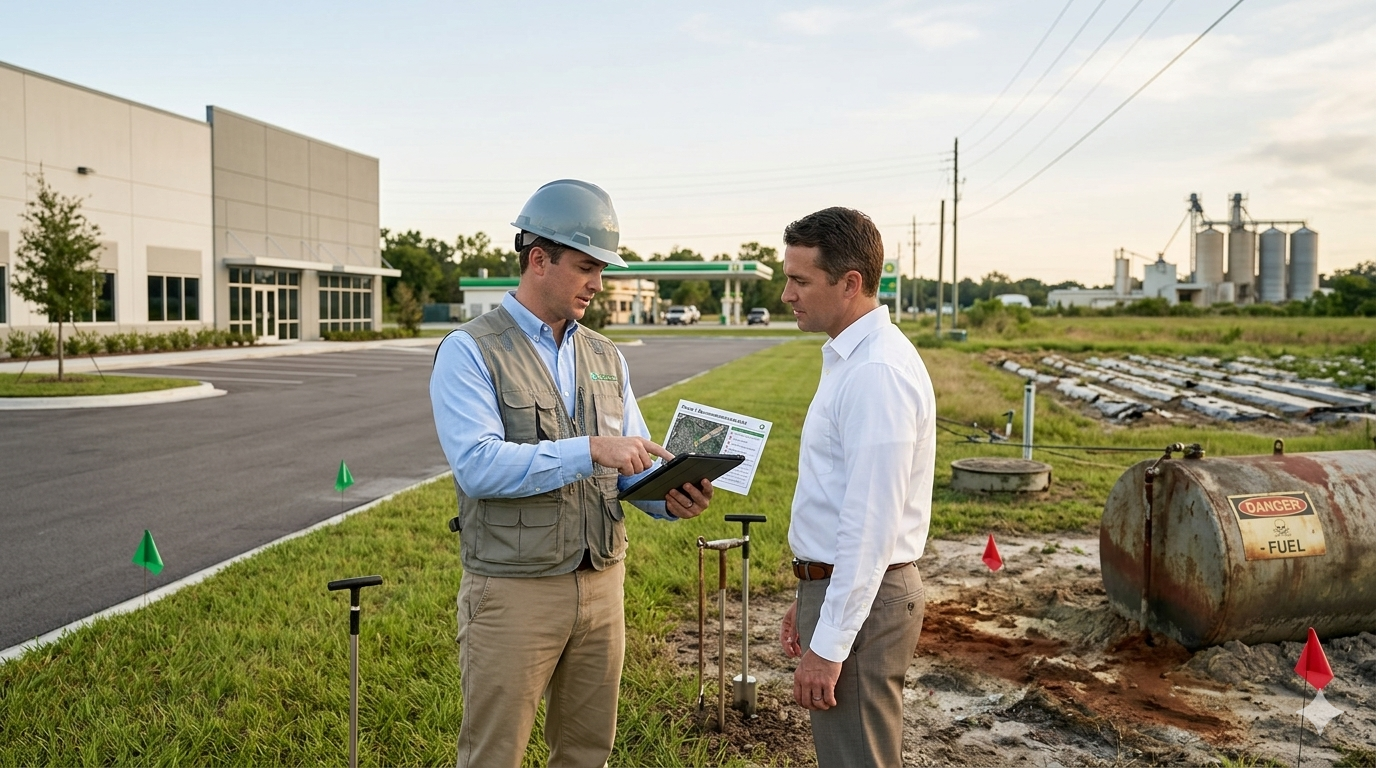
If you’re thinking about buying or financing a commercial property in Florida, there’s one step you don’t want to skip: a phase 1 environmental site assessment Florida. Think of it as a health check for the property. Just like you wouldn’t buy a house without a home inspection, you shouldn’t invest in commercial property
without checking for hidden environmental issues.
A Phase 1 ESA is a crucial part of environmental due diligence Florida. It follows the ASTM E1527-21 phase 1 ESA standard and ensures you meet the all appropriate inquiry (AAI) standard. Why does that matter? Because it can protect you from unexpected environmental liability that could cost you thousands or even hundreds of thousands of dollars later.
Skipping this step might feel like a shortcut, but it’s risky. Purchasing a property and discovering contamination afterward can delay projects, reduce property value, and create significant financial challenges.
Why Phase 1 ESA Is Important in Florida
Florida is a special case when it comes to environmental risks. Decades of agriculture, industrial sites, and rapid development mean contamination can exist even on properties that appear clean.
A commercial property environmental assessment Florida gives buyers and investors a clear picture of potential risks. It helps protect investments, supports lender requirements, and allows informed decisions before closing.
Common Environmental Risks in Florida
Here are some examples of what could be lurking on a property:
- Former agricultural land – old pesticides or fertilizers may have contaminated the soil or groundwater.
- Gas stations or fuel storage areas – underground storage tanks can leak over time.
- Industrial or warehouse properties – previous chemical storage or industrial operations may leave hazardous residues.
- Dry cleaning facilities – older facilities may have used solvents like PCE, which can persist for decades.
- Sites near wetlands or waterways – contamination can spread more easily in Florida’s porous soils and sensitive ecosystems.
Given these risks, conducting proper environmental due diligence in Florida isn’t just a smart move; it’s essential.
What Happens During a Phase 1 Environmental Site Assessment?
A pre-acquisition environmental assessment Florida typically includes:
Here’s what usually happens:
- Historical research – reviewing old aerial photos, property records, and past land uses.
- Property inspection – walking the site to spot any visible signs of contamination.
- Regulatory review – checking federal, state, and local environmental databases for violations
or contamination. - Interviews – speaking with property owners, tenants, and neighbours to uncover hidden issues.
- Identifying recognized environmental conditions (REC) – looking for areas where hazardous substances or petroleum products are likely present.
- Review of surrounding properties – nearby contamination can impact your site.
- substances or petroleum products are likely present.
If risks are identified, a Phase 2 ESA may be recommended to confirm contamination through testing of soil, groundwater, or building materials.
Recognized Environmental Conditions (REC) – What You Need to Know
A recognized environmental condition (REC) is essentially a warning sign indicating the known or likely presence of hazardous substances or petroleum products. Finding RECs early can save you from expensive surprises later.
Some examples of RECs:
- Leaking underground storage tanks
- Chemical stains or unusual odors
- Past industrial or commercial use
- Contamination from nearby properties
Identifying RECs early allows buyers to negotiate pricing, plan remediation, or reconsider the purchase if necessary.
Phase 1 ESA Requirements Florida
To be effective, a Phase 1 ESA in Florida needs to meet several requirements:
- Follow ASTM E1527-21 phase 1 ESA standards
- Comply with federal AAI regulations
- Include proper documentation and reporting
- Be conducted by a qualified environmental professional
Meeting these standards ensures your report will be accepted by lenders, investors, and regulatory agencies while supporting liability protection.
Environmental Liability Protection Florida
One of the biggest benefits of a Phase 1 ESA is environmental liability protection Florida. When done according to the all appropriate inquiry (AAI) standard, it can qualify you for protections like:
- Innocent landowner defence – shields you from liability for past contamination.
- Bona fide prospective purchaser protection – protects new owners if due diligence standards are met.
- Contiguous property owner protection – limits liability for contamination from neighbouring properties.
These protections give investors peace of mind and reduce financial risk.
Who Should Get a Phase 1 Environmental Site Assessment?
You may need a phase 1 environmental site assessment Florida if you are:
- Buying commercial property
- Refinancing a property
- Developing or redeveloping a site
- Leasing commercial space
- Acquiring property as part of a merger or investment
If financial risk is involved, a Phase 1 ESA is a smart step.
Picking the Right Environmental Consultant
Choosing the right environmental consultant is key. Look for someone experienced, authorized, and familiar with Florida regulations. The right professional will:
- Conduct accurate surveys and inspections
- Provide thorough, clear documentation
- Ensure compliance with local, state, and federal rules
- Coordinate efficiently for permits or relocations if needed
Getting a consultant involved early can prevent delays, reduce uncertainty, and save you from unexpected costs.
FAQ – Phase 1 ESA Florida
1. How long does a Phase 1 ESA take?
Most Phase 1 ESAs are completed in 2–4 weeks. Projects involving older industrial properties, missing historical records, or multi-parcel sites may take longer.
2. How much does a Phase 1 ESA cost in Florida?
Typical costs range from $2,500 to $5,000 for standard commercial or residential properties. Larger or more complex sites may require additional research, which can affect pricing.
3. Does a Phase 1 ESA find all types of contamination?
A Phase 1 ESA identifies potential environmental risks and recognized environmental conditions (RECs) through research and site inspection. If risks are identified, a Phase 2 ESA may be recommended to confirm contamination through testing.
4. Is a Phase 1 ESA legally required in Florida?
A Phase 1 ESA is not required for every property transaction. However, lenders, investors, and commercial buyers often require one to meet due-diligence standards and reduce environmental liability.
5. How does it protect me?
It helps you identify environmental risks before closing, avoid unexpected cleanup costs, and strengthen your negotiating position with sellers.
6. When should you order a Phase 1 ESA?
A Phase 1 ESA should be ordered during the due-diligence period, before closing on a property, so any risks can be identified and addressed in time.
Final Thoughts
A phase 1 environmental site assessment florida is more than a regulatory step; it is a critical tool for risk management. By identifying potential environmental concerns early, buyers and investors can protect their investments, satisfy lender requirements, and move forward with confidence.
Whether purchasing, refinancing, or developing property, conducting thorough environmental due diligence Florida provides clarity, legal protection, and a clear path forward.
