
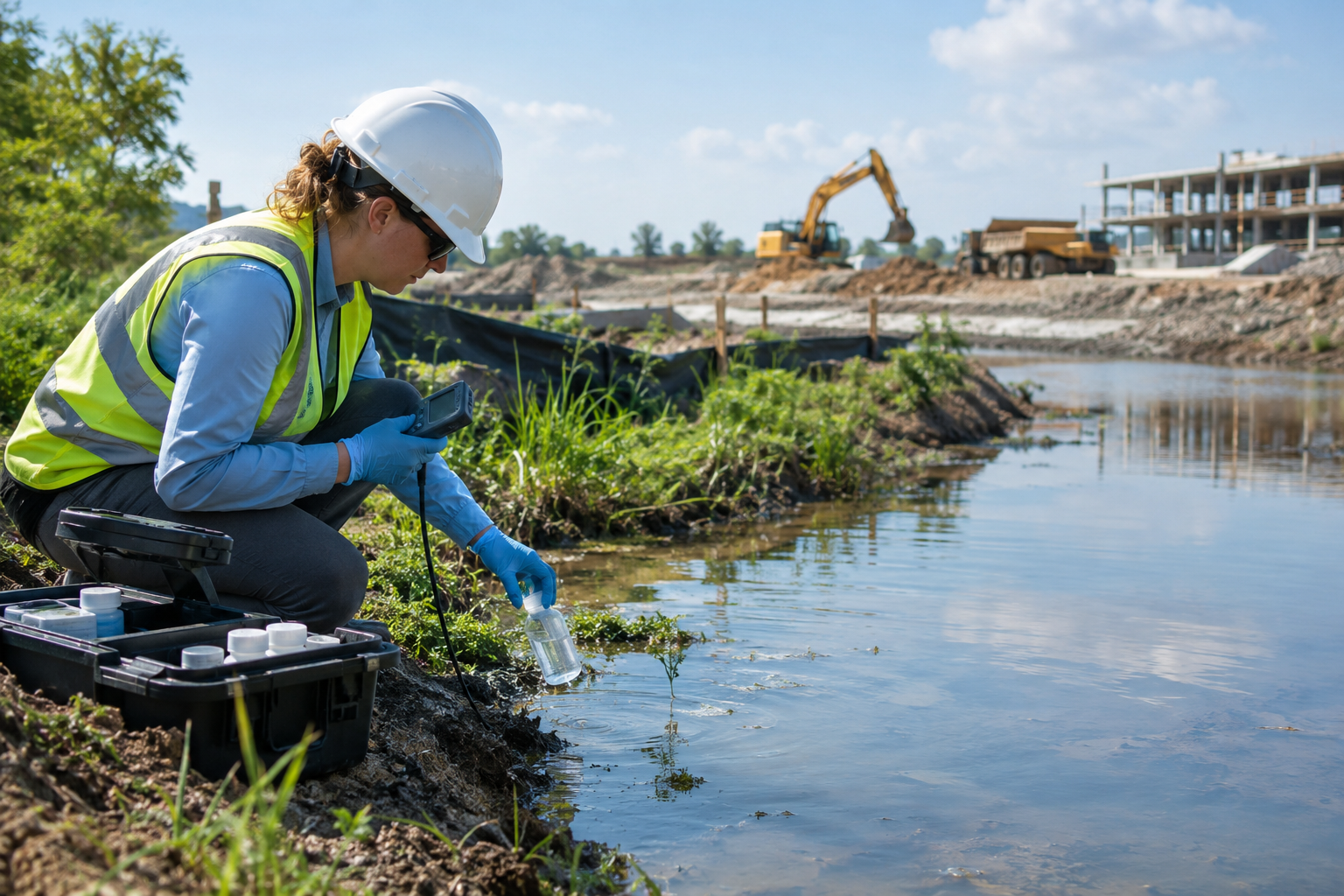
Construction activities can affect nearby water resources, especially when excavation, grading, dewatering, or other site work changes existing conditions.
That is where water quality monitoring becomes important. In Florida, water quality monitoring involves the collection and analysis of surface and groundwater samples to support compliance with State Water Quality Standards under Chapter 62-302, F.A.C.
For construction projects, monitoring may support activities such as construction dewatering, industrial discharge, and ambient monitoring.
Why Is Water Quality Monitoring Important During Construction?
Construction can involve excavation, grading, dewatering, and other activities that may affect nearby surface or groundwater resources.
Water quality monitoring provides documented information about water conditions during a project and can support compliance with applicable State Water Quality Standards.
For construction projects, monitoring may also support dewatering, discharge, and ambient monitoring programs where applicable.
When Might a Construction Project Need Water Quality Monitoring?
Not every construction project will have the same monitoring requirements. The appropriate approach depends on the project, site conditions, water resources involved, and applicable requirements.
Water quality monitoring may be relevant when construction involves:
- Construction dewatering
- Discharge of groundwater or other water from the site
- Work that may affect nearby surface waters
- Industrial discharge associated with the project
- Ambient water quality monitoring
- Specific permit or project requirements
Reviewing these requirements before construction begins can help you determine what monitoring and documentation may be appropriate for your project
What Does Water Quality Monitoring Include?
The monitoring approach depends on your construction project, site conditions, and applicable requirements. Depending on the project, water quality monitoring services may include field sampling, laboratory analysis, data validation, and trend analysis.
Field Sampling
Water samples may be collected as grab or composite samples, depending on the monitoring program. Testing can include parameters such as turbidity, pH, dissolved oxygen, nutrients, and bacteria.
The sampling method and testing parameters should match the monitoring purpose and applicable requirements.
Certified Laboratory Analysis
Depending on the project and monitoring requirements, collected samples may require laboratory analysis for additional parameters. IVA Environmental uses a state-certified NELAP laboratory for applicable analysis.
Data Validation
IVA Environmental uses FDEP’s ADaPT software to validate laboratory Electronic Data Deliverables (EDDs). This helps prepare validated data for applicable FDEP reporting requirements.
Trend Analysis
When monitoring is conducted repeatedly during a construction project, comparing results over time can help identify changes in water conditions. This can help distinguish an isolated result from a developing trend.
How Does Construction Dewatering Affect Water Quality?
Construction dewatering removes groundwater from an excavation so work can continue. Depending on the site and discharge, the water may need to be evaluated before it is released.
Applicable discharge or monitoring requirements can vary based on the project, discharge location, site conditions, and permit requirements.
Planning monitoring requirements before pumping begins can help you determine the appropriate sampling and documentation for the project.
How Can Construction Affect Turbidity?
Turbidity refers to the cloudiness of water caused by suspended particles. Construction activities can increase turbidity when exposed soil or sediment reaches nearby water.
Water quality monitoring can help measure turbidity and document changes in water conditions during construction. The appropriate monitoring approach depends on the project, site conditions, and applicable requirements.
What Are the Deliverables of Water Quality Monitoring?
Depending on the project and monitoring requirements, deliverables may include:
- Water Quality Data Reports: Laboratory results, field observations, and sampling records.
- ADaPT Files: Validated electronic data prepared for applicable FDEP reporting or WIN database upload requirements.
These records provide organized documentation of monitoring activities and results.
How Can IVA Environmental Help?
IVA Environmental provides water quality monitoring services for surface water and groundwater sampling, assessment, and monitoring across Florida.
Our services can support construction dewatering, industrial discharge, ambient monitoring, and evaluation against applicable Florida water quality requirements.
Depending on your project, services may include field sampling, certified laboratory analysis, FDEP ADaPT data validation, and compliance reporting.
Related services may include Wetland Permitting and Management, and Stormwater Management & NPDES.
If your construction project may affect water resources, contact IVA Environmental to discuss your monitoring needs.
Final Thoughts
Water quality may not be the first thing on your mind when you are managing excavation, equipment, schedules, and deadlines. However, construction activities can affect nearby water resources, particularly when groundwater is discharged or site work takes place near surface waters.
Addressing monitoring requirements early can give you time to plan the appropriate sampling and documentation for your project.
Frequently Asked Questions
-
Is water quality monitoring required for every construction site in Florida?
No. Requirements depend on the project’s location, activities, nearby water resources, discharges, permits, and applicable environmental conditions.
-
What does water quality monitoring test for?
Depending on the monitoring program, testing may include turbidity, pH, dissolved oxygen, nutrients, bacteria, and other required parameters.
-
Is monitoring required for construction dewatering?
It can be. Requirements depend on the type of dewatering activity, discharge location, site conditions, and applicable permit or project requirements.
-
Why does turbidity matter during construction?
Turbidity is the cloudiness of water caused by suspended particles. Construction can increase turbidity when soil or sediment enters nearby water. Monitoring can help document changes in turbidity and water conditions during the project.
-
How often should construction water quality be monitored?
There is no single frequency for every project. The schedule depends on permit conditions, construction activities, site conditions, and the project’s monitoring requirements.
