

Bald Eagle Management Plans & Monitoring
What is it?
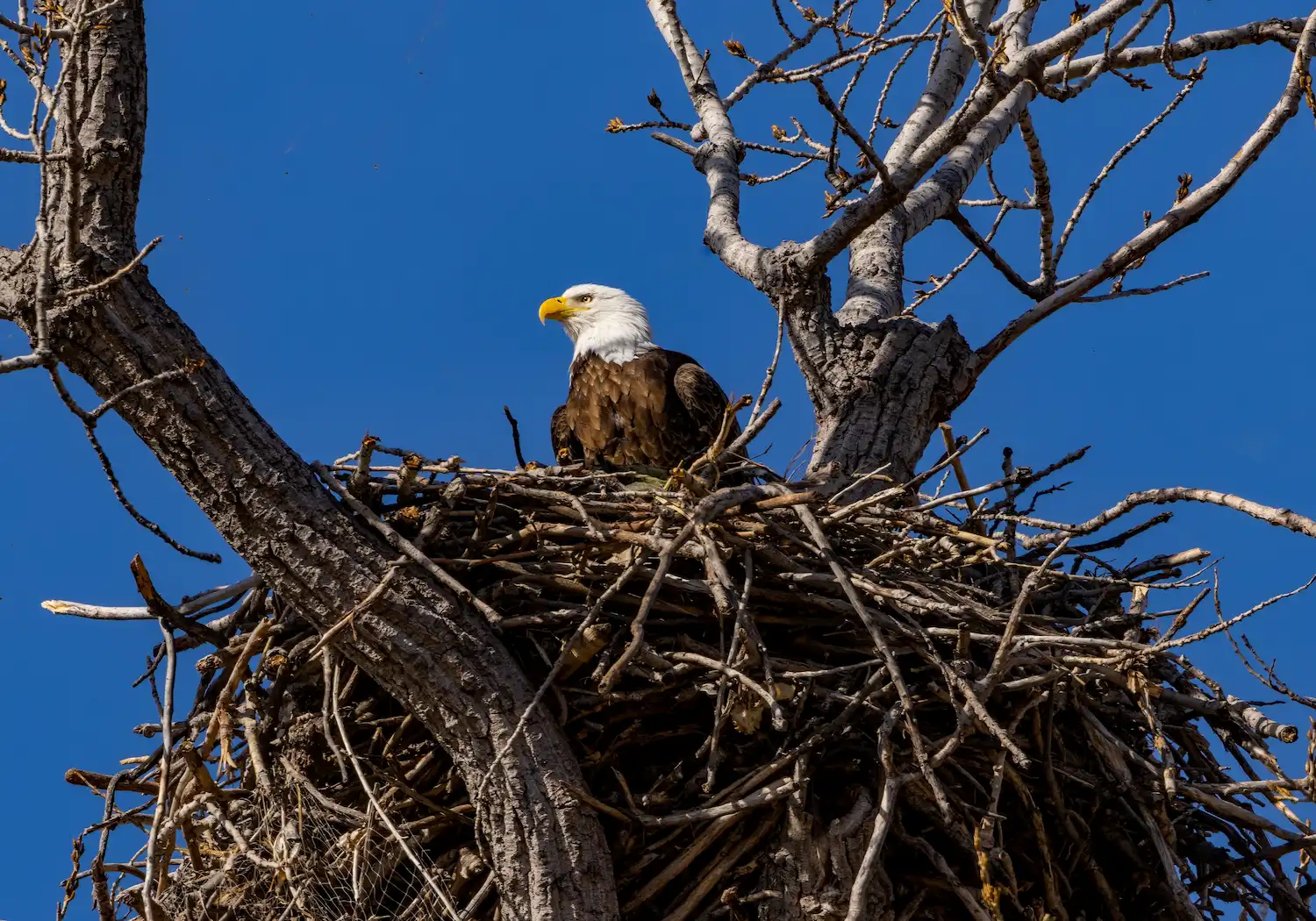
While delisted from the Endangered Species list, the Bald Eagle (Haliaeetus leucocephalus remains federally protected under the Bald and Golden Eagle Protection Act (BGEPA) and the Migratory Bird Treaty Act. This service ensures project compliance through nest surveys, monitoring, and the development of Bald Eagle Management Plans. The primary regulatory focus is on maintaining buffers around active nests during the nesting season (October 1 – May 15). We ensure regulatory clarity and give project teams the environmental foresight needed for planning and compliance.
Who needs this service?
- Developers and Landowners: Construction work within 660 feet of a known eagle nest.
- Infrastructure Projects: Roadways or utilities near large water bodies or pine flatwoods where eagles nest.
What does it include?
- Nest Activity Surveys: Monitoring nests to determine if they are active, inactive, or alternate.
- Bald Eagle Management Plan (BEMP): Developing specific avoidance and minimization measures if work must occur within the buffer.
- Construction Monitoring: On-site biological monitoring during construction within the typical 660-foot buffer to detect behavioral disturbances.
- USFWS Permitting: Assisting with Eagle Incidental Take Permits if disturbance is unavoidable.
Why is it important?
Violating the BGEPA can result in massive federal fines. The 660-foot buffer is a critical compliance zone and working within it requires specific protocols. Early identification of nests allows project phasing (e.g., working outside nesting season) to avoid permitting delays. Ignoring this requirement can lead to costly delays, enforcement actions, or permanent impacts on project viability.
Deliverables
- Nest Location Map: Showing 330-foot and 660-foot buffer zones.
- Monitoring Reports: Documenting eagle behavior during construction.
- USFWS Coordination Records: Providing proof of compliance to lenders and agencies.
Let’s Get Started
Don’t invest in land without knowing the facts. Contact us today to schedule your Bald Eagle Management Plans & Monitoring and ensure your investment aligns with your goals.
