
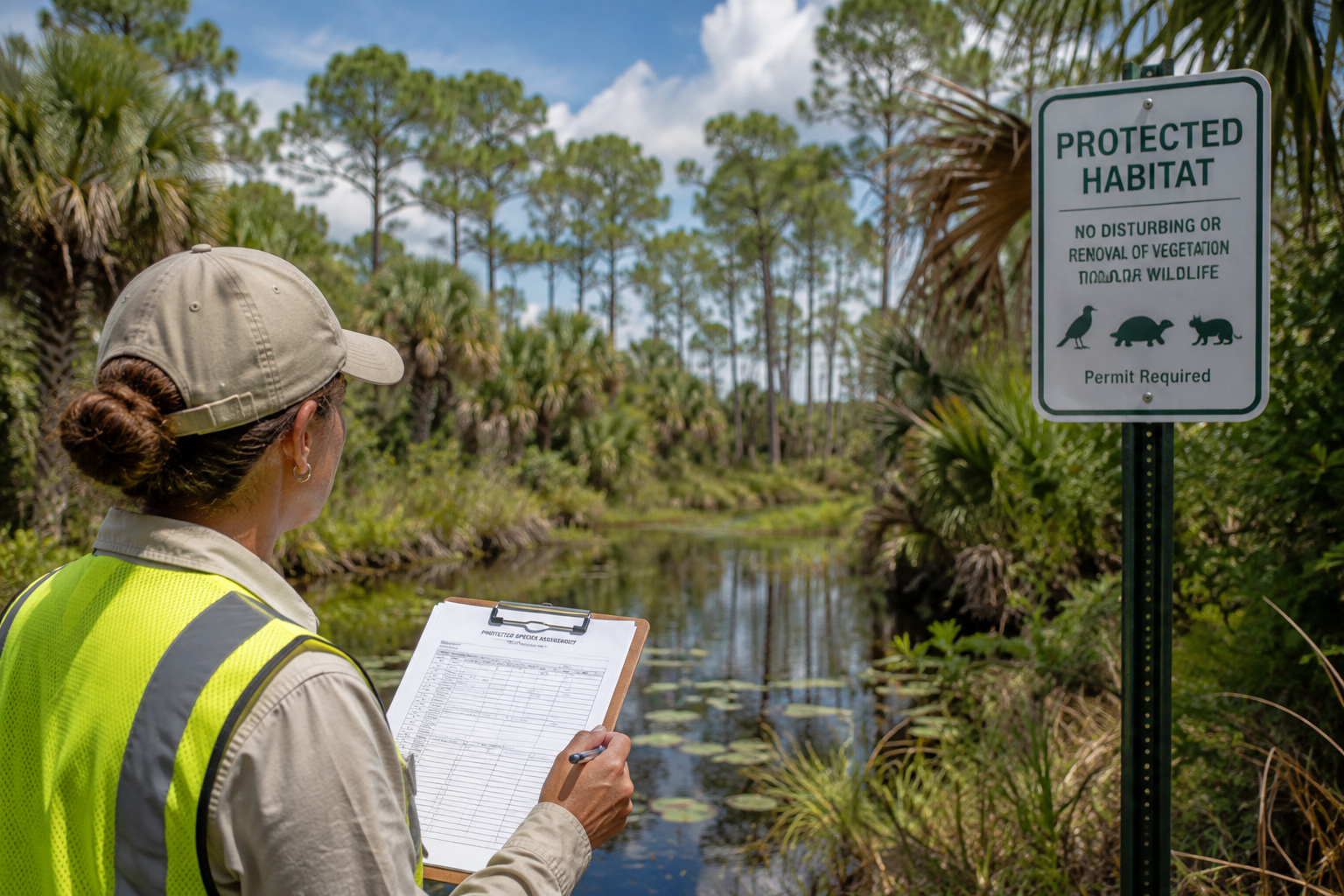
Development projects in Florida often involve environmentally sensitive land, wetlands, or habitats that support protected wildlife species. Before construction or land clearing begins, a Protected Species Assessment (PSA) may be required to identify potential environmental impacts and ensure regulatory compliance.
These assessments help determine whether protected species or habitats are present on-site and identify measures needed to avoid, minimize, or mitigate impacts. Understanding protected species requirements early can help reduce project delays, permitting challenges, and compliance risks.
What Is a Protected Species Assessment?
A Protected Species Assessment (PSA) is an environmental evaluation used to identify federally or state-protected wildlife species and sensitive habitats within a project area. The assessment helps determine potential environmental impacts and whether additional permitting, mitigation, or conservation measures may be required.
What Is a Listed Species Survey?
A listed species survey is a field investigation conducted to determine whether threatened, endangered, or protected species are present within a project area. These surveys help assess potential impacts, permitting requirements, and necessary conservation measures.
In Florida, Protected Species Assessments (PSAs) are commonly required for development, infrastructure, land clearing, and wetland-related projects. Assessments typically include wildlife surveys, habitat evaluations, mapping, and regulatory reviews to support environmental compliance.
Why Protected Species Assessments Are Important

Florida is home to a wide range of environmentally sensitive habitats that support threatened, endangered, and protected wildlife species.
Protected Species Assessments help:
- Support compliance with environmental regulations
- Reduce permitting delays and regulatory risks
- Identify environmental concerns early in project planning
- Protect sensitive wildlife habitats
- Help projects move forward responsibly
Many protected species in Florida are protected under the federal Endangered Species Act (ESA) and state wildlife regulations.
Common Protected Species in Florida
Florida is home to many protected wildlife species that may trigger environmental review or permitting requirements, including:
- Reptiles: Gopher tortoise, Eastern indigo snake
- Birds: Florida scrub-jay, Wood stork, Burrowing owl
- Mammals: Florida bonneted bat, Manatee
- Other federally or state-protected species
Sensitive habitats such as wetlands, coastal dunes, scrub habitats, and wildlife corridors may also require environmental review during development planning.
When Is a Protected Species Assessment Required?
A Protected Species Assessment may be required when a project involves:
- Land development near sensitive habitats
- Vegetation clearing or grading
- Wetland impacts
- Construction near known wildlife habitats
- Infrastructure or utility expansion
- Government or transportation projects
Environmental agencies may request species assessments during:
- Environmental permitting
- Site development review
- Wetland permitting
- Habitat Conservation Plan (HCP) preparation
- Endangered Species Act (ESA) compliance reviews
Even smaller projects may require environmental review if protected species or habitats are present on-site.
What Does a Protected Species Assessment Include?
While every project is different, most Protected Species Assessments include several key components.
1. Site Investigation
Environmental professionals review:
- Property characteristics
- Existing habitat conditions
- Land use activities
- Wetlands and natural resources
- Potential wildlife habitat areas
2. Wildlife Surveys
Field surveys help identify:
- Protected species presence
- Burrows or nesting locations
- Wildlife movement patterns
- Habitat quality and suitability
Survey methods may include visual inspections, nesting surveys, burrow identification, habitat evaluations, and GPS mapping. Depending on the species and regulatory requirements, surveys may need to be conducted during specific seasons or breeding periods.
3. Habitat Assessment
Environmental consultants evaluate habitat conditions to determine:
- Habitat sensitivity
- Potential environmental impacts
- Species dependency on the site
- Areas requiring protection or mitigation
4. Environmental Mapping and Regulatory Review
Consultants may conduct FLUCCS mapping and review:
- Federal environmental regulations
- Florida wildlife protection laws
- Local environmental requirements
- Permit and mitigation obligations
5. Recommendations and Mitigation Measures
The final assessment may include recommendations such as:
- Avoidance strategies
- Construction timing restrictions
- Wildlife relocation procedures
- Habitat preservation measures
- Environmental monitoring requirements
- Permit application support
Learn more about our Protected Species Assessment in Florida services and how we help with wildlife surveys, habitat evaluations, and environmental permitting for development projects.
How the Protected Species Assessment Process Works
Completing a Protected Species Assessment typically involves several important steps.
-
Initial Site Assessment
Environmental consultants conduct site investigations, wildlife surveys, and habitat evaluations to identify protected species and environmental concerns.
-
Agency Coordination
Project teams may coordinate with agencies such as:
- U.S. Fish and Wildlife Service
- Florida Fish and Wildlife Conservation Commission
- U.S. Army Corps of Engineers
- Local environmental agencies and permitting authorities
-
Assessment Preparation
Environmental consultants prepare the Protected Species Assessment based on survey findings, habitat conditions, and regulatory requirements.
-
Permit Review and Compliance
Regulatory agencies may review assessment findings alongside permit applications and request additional documentation if necessary.
-
Monitoring and Follow-Up
Some projects may require environmental monitoring, mitigation implementation, and compliance reporting during or after construction activities.
Incomplete or incorrect submissions can lead to permit delays or rejection. See our guide on why environmental permits get rejected for more details.
How Much Does It Cost to Protect Endangered Species?
One of the most common questions property owners ask is: how much does it cost to protect endangered species during development projects?
The answer varies depending on several factors, including:
Factor |
Impact on Cost |
| Property size | Larger sites increase survey cost |
| Species type | Rare/endangered species require detailed studies |
| Survey timing | Seasonal restrictions may increase cost |
| Permits required | Permits from the U.S. Fish and Wildlife Service and Florida Fish and Wildlife Conservation Commission may add regulatory complexity |
| Mitigation needs | Relocation or habitat restoration increases cost |
Smaller projects may only require basic wildlife surveys, while larger developments may involve additional costs for mitigation planning, habitat restoration, species relocation, permitting, and environmental monitoring.
Additional costs may include:
- Permit application fees
- Habitat Conservation Plan (HCP) development
- Wildlife relocation services
- Wetland mitigation
- Environmental compliance monitoring
Because every site is unique, environmental consultants typically evaluate project conditions before providing cost estimates.
Costs vary significantly based on regulatory requirements and site conditions
Benefits of Early Environmental Assessment
Completing a Protected Species Assessment early in the planning process can help identify environmental concerns before they impact project timelines.
For Developers and Landowners
- Reduces regulatory uncertainty
- Helps avoid project delays
- Supports smoother permitting
- Identifies environmental risks early
- Improves project planning and budgeting
For Wildlife and Ecosystems
- Protects sensitive habitats
- Reduces impacts on protected species
- Supports long-term conservation efforts
- Encourages responsible development practices
Experienced environmental consultants can also help conduct surveys, coordinate with agencies, prepare environmental documentation, and develop effective mitigation strategies.
Protected Species Assessments and Habitat Conservation Plans
In some cases, a Protected Species Assessment may lead to the development of a Habitat Conservation Plan (HCP). If you want to understand this process in detail, see our complete guide on what a Habitat Conservation Plan is and how it works.
When a project has the potential to impact federally protected species, regulatory agencies may require additional steps such as:
- Additional environmental review
- Mitigation planning
- Incidental Take Permits (ITPs)
- Long-term habitat conservation measures
Protected Species Assessments provide critical environmental data that supports HCP development, permitting, and regulatory compliance.
Final Thoughts
Protected Species Assessments are an important step in identifying potential impacts on protected wildlife and sensitive habitats before development begins. By addressing environmental concerns early, property owners and developers can reduce permitting challenges, avoid costly delays, and support responsible project planning.
Need a Protected Species Assessment in Florida? IVA Environmental Services provides wildlife surveys, habitat evaluations, permitting support, and environmental consulting services to help keep your project moving forward.
FAQs
-
What is a Protected Species Assessment?
A Protected Species Assessment is an environmental evaluation used to identify protected wildlife species and sensitive habitats that may be affected by a development project.
-
Why are Protected Species Assessments important in Florida?
These assessments help ensure compliance with federal and state environmental regulations while protecting endangered species and sensitive ecosystems during development projects.
-
What species commonly require environmental review in Florida?
Species such as gopher tortoises, Florida scrub-jays, burrowing owls, eastern indigo snakes, wood storks, and manatees commonly require environmental review.
-
How much does it cost to protect endangered species?
The cost to protect endangered species varies widely depending on site size, species present, survey requirements, and mitigation needs, ranging from basic wildlife surveys to complex conservation planning.
-
When is a Protected Species Assessment required?
A Protected Species Assessment is often required before land clearing, construction, wetland impacts, infrastructure improvements, or development near protected habitats.
-
Who conducts Protected Species Assessments?
Protected Species Assessments are typically conducted by environmental consultants and wildlife professionals who specialize in ecological surveys and environmental permitting.
